CMMS Implementation Support That Delivers

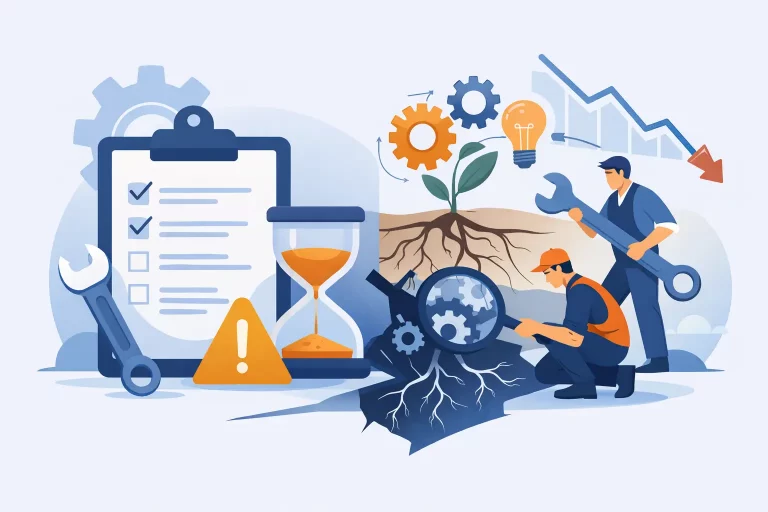
A CMMS rollout rarely fails because the software cannot handle the work. It fails because the organization treats setup as the finish line. Real cmms implementation support closes the gap between system configuration and daily maintenance execution, where most value is either created or lost.
For maintenance and facilities leaders, that gap shows up fast. Preventive maintenance schedules exist but are not followed consistently. Work orders are opened, but codes are inconsistent and closeout data is weak. Asset records are loaded, but the hierarchy does not match how the operation actually runs. Leadership asks for KPI visibility, and the reports do not hold up. The software is live, yet the operation is still managing maintenance through tribal knowledge, spreadsheets, and workarounds.
What CMMS implementation support should actually cover
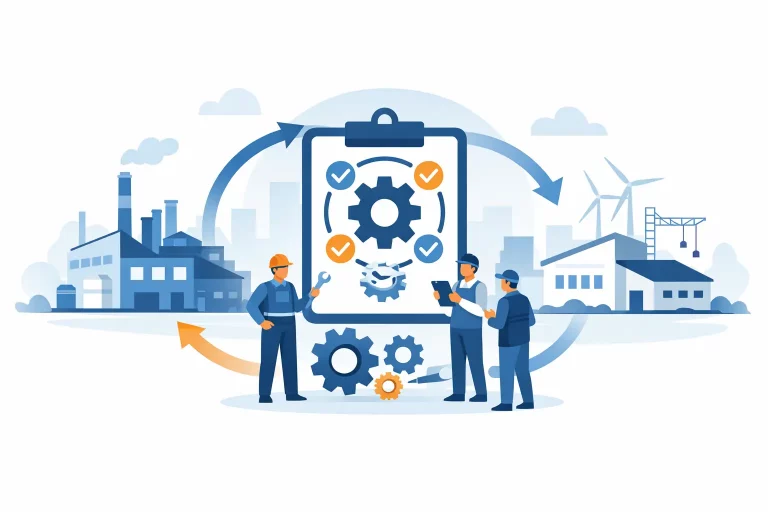
Strong CMMS implementation support is not just technical help during go-live. It is operational guidance that aligns the system to how maintenance work should be planned, executed, documented, and reported.
That means the support model has to go deeper than user permissions, screen layouts, and import templates. Those items matter, but they are not enough on their own. If the underlying workflow is unclear, bad process gets digitized faster. If asset data is incomplete, preventive maintenance triggers become unreliable. If technicians are trained on clicks but not on expectations, adoption stalls.
A useful implementation approach usually covers five areas at once: asset structure, maintenance workflows, preventive maintenance setup, reporting logic, and user accountability. When one is weak, the others suffer. A clean PM library does not help much if assets are duplicated. Good dashboards do not mean much if work order closeout discipline is poor.
Why CMMS implementation support breaks down
In most organizations, the breakdown starts with assumptions. Leadership assumes the vendor will guide the process design. The vendor assumes the client has already defined standards. Site teams assume the system can be adjusted later. By the time everyone realizes that core decisions were never made, the CMMS is already live and habits are already forming.
There is also a common pressure to move too quickly. Go-live dates get tied to budget cycles, software contracts, or executive expectations. That creates a rush to populate data and train users before the operation has agreed on naming standards, priority codes, PM intervals, failure classifications, or approval flows. The system may launch on time, but the maintenance program enters production with structural weaknesses.
Multi-site environments add another layer. Standardization is necessary for reporting and governance, but over-standardization can ignore site-level reality. A hospital, a campus, and a manufacturing plant do not execute maintenance in exactly the same way. Good support accounts for that tension. It creates a common framework without forcing every location into an impractical template.
The difference between software setup and operational readiness
This is where many implementations lose credibility with frontline teams. From an IT or procurement perspective, the software may be installed correctly. From a maintenance perspective, the system is not ready if it slows down work, creates confusion, or asks technicians to enter data that no one uses.
Operational readiness means technicians can receive, prioritize, execute, and close work without guesswork. It means supervisors can see backlog, overdue PMs, and labor utilization in a way that supports action. It means planners and reliability teams can trust the asset history enough to make decisions. It means leadership can review KPI trends without wondering whether the inputs are flawed.
That standard takes more than deployment. It takes implementation support grounded in maintenance operations.
Asset data has to reflect the real world
One of the fastest ways to damage CMMS adoption is to load asset data that looks complete in a spreadsheet but makes no sense in the field. If equipment names are vague, locations are inconsistent, or parent-child relationships are wrong, users stop trusting the system. Once that happens, they work around it.
Support should include practical validation of asset hierarchy, naming conventions, criticality logic, and required fields. Not every organization needs the same depth of asset detail on day one. It depends on the maturity of the maintenance program, the compliance burden, and the reporting goals. But every organization does need a structure that supports PM assignment, work order history, and financial visibility.
PM setup should support execution, not just compliance
A preventive maintenance program can look impressive on paper and still fail in practice. Common issues include unrealistic frequencies, generic task lists, poor labor estimates, and missing parts or safety instructions. When that happens, technicians treat PMs as administrative requirements instead of value-driving work.
Good implementation support tests whether PMs are executable. Are routes logical? Are task instructions useful? Are seasonal assets handled correctly? Are trigger rules based on time, usage, or condition where appropriate? The right answer depends on the asset class and operating environment. A compliance-heavy environment may need tighter documentation. A production environment may prioritize uptime and repeat failure reduction. The CMMS should reflect those priorities clearly.
Training is not the same as adoption
Most teams receive some level of training during implementation. The problem is that training is often delivered as system navigation, not role-based execution. Users are shown where to click, but not why data quality matters or what good closeout looks like.
Technicians, supervisors, planners, and executives need different forms of support. Technicians need workflows that are fast and logical in the field. Supervisors need standards for assignment, review, and escalation. Leadership needs reporting definitions they can trust. If everyone is trained the same way, no one gets what they actually need.
This is also where accountability matters. Adoption improves when the organization defines who owns asset creation, PM approval, work order coding, backlog review, and KPI validation. Without that clarity, the CMMS becomes a shared system with no clear governance.
What effective CMMS implementation support looks like in practice
The strongest support models are diagnostic first and technical second. They start by identifying where process, data, and reporting are misaligned. Then they configure the system to support a better operating model.
In practice, that often means slowing down before speeding up. Teams may need to clean the asset registry before importing everything. They may need to redesign work order statuses so they match actual field execution. They may need to simplify PM templates before scaling them across sites. That can feel like extra effort, but it prevents a much larger cleanup later.
Effective support also extends beyond go-live. The first 60 to 90 days usually expose the real issues: missed statuses, duplicate assets, poor mobile usage, incomplete labor capture, and report definitions that do not match leadership expectations. Post-launch review is where implementation becomes performance improvement instead of a one-time setup exercise.
Metrics should be built early, not after the rollout
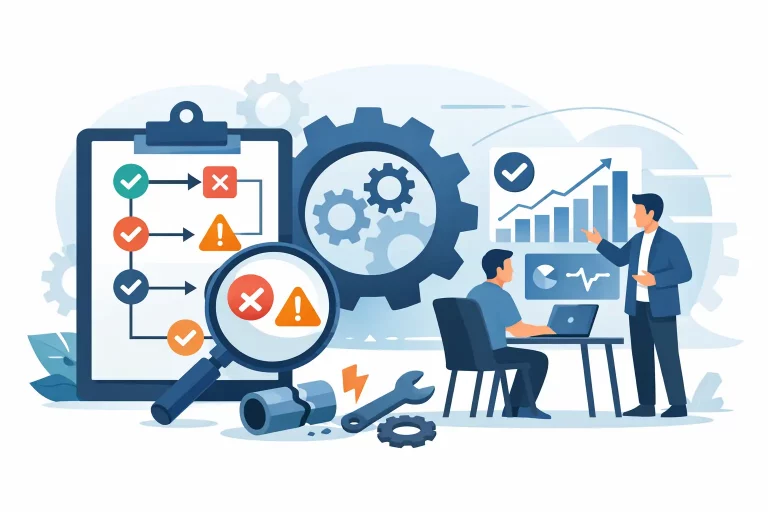
If KPI reporting is treated as a later phase, teams often discover too late that the source data is inconsistent. Planned versus unplanned work, schedule compliance, PM completion, wrench time, and backlog age all depend on disciplined workflow design.
That is why reporting logic should be part of implementation from the start. Leaders need to know which fields are mandatory, which codes drive performance analysis, and how site-level data rolls up to enterprise reporting. Otherwise the organization ends up with dashboards that look polished but cannot guide decisions.
When outside support makes the most sense
Not every organization needs the same level of help. A smaller single-site team with a mature maintenance process may only need targeted guidance around data structure or PM design. A multi-site enterprise with inconsistent standards, poor adoption, and weak reporting may need a full operational reset.
Outside support is especially valuable when internal teams are stretched, when the CMMS has already lost credibility, or when compliance and uptime risks are too high to tolerate another weak rollout. The advantage is not just extra bandwidth. It is objective structure. A specialized advisor can see where process assumptions, data problems, and governance gaps are undermining results.
That is the difference between a system that stores work orders and one that drives performance. Firms like Eficiqo focus on that operational layer because software alone does not create accountability, usable data, or PM discipline.
CMMS implementation support should create momentum
A good implementation does more than get a platform live. It gives maintenance teams a system they can rely on, leaders metrics they can use, and the organization a stronger foundation for uptime, compliance, and cost control.
If your current rollout effort is producing confusion, weak adoption, or reporting that no one trusts, the issue is probably not the software. It is the absence of support that connects configuration to execution. Fix that connection, and the CMMS starts doing the job it was supposed to do all along.