Service Dispatch Process Guide That Works

When a technician shows up without the right parts, the wrong priority, or incomplete job details, the problem usually started before the wrench turned. Dispatch is where service execution either gains control or loses it. This service dispatch process guide is built for maintenance leaders and field service teams that need faster response, better technician utilization, and cleaner operational visibility.
Why the service dispatch process breaks down
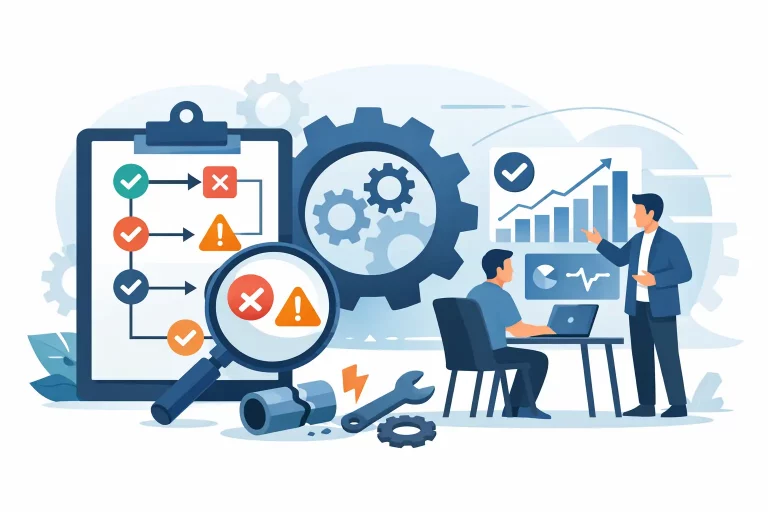
Most dispatch problems are not caused by effort. They are caused by inconsistency. One dispatcher uses tribal knowledge. Another relies on email. A supervisor bypasses the system for urgent work. Technicians call in updates that never make it back into the platform. The result is predictable – delayed response, poor scheduling decisions, weak reporting, and low confidence in the data.
In many organizations, the dispatch function sits between customer expectations, technician capacity, asset criticality, and system limitations. That is a hard place to operate if the workflow is not clearly defined. A CMMS or FSM platform can help, but software does not fix an unmanaged process. If intake is messy, prioritization is subjective, and technician status is unreliable, the platform simply records bad execution faster.
That is why dispatch should be treated as an operational control point, not an administrative task. It determines how work enters the system, how urgency is interpreted, how labor is assigned, and how service commitments are managed.
A practical service dispatch process guide
A strong dispatch process starts before a work order is assigned. It starts with intake discipline. Every request needs a consistent minimum data set. That usually includes site, asset or equipment reference, problem description, requester, requested time, priority basis, and any known safety or access constraints. If your team cannot answer basic questions at intake, dispatch decisions become guesswork.
The next step is triage. This is where many teams create avoidable chaos. Priority should not be based on who shouts the loudest or which manager sends the last text message. It should be based on a defined logic tied to operational impact. Asset criticality, safety exposure, service level commitments, production risk, occupancy impact, and technician availability all matter. The exact weighting depends on your environment. A hospital, a manufacturing plant, and a commercial HVAC contractor will not triage work the same way.
Once the work is prioritized, dispatch needs clear assignment logic. That logic should consider technician skill, geography, current workload, shift coverage, certification requirements, parts readiness, and travel efficiency. The best assignment is not always the closest technician. Sometimes it is the technician who can complete the job on the first visit. Over time, that distinction has a major impact on labor efficiency and customer satisfaction.
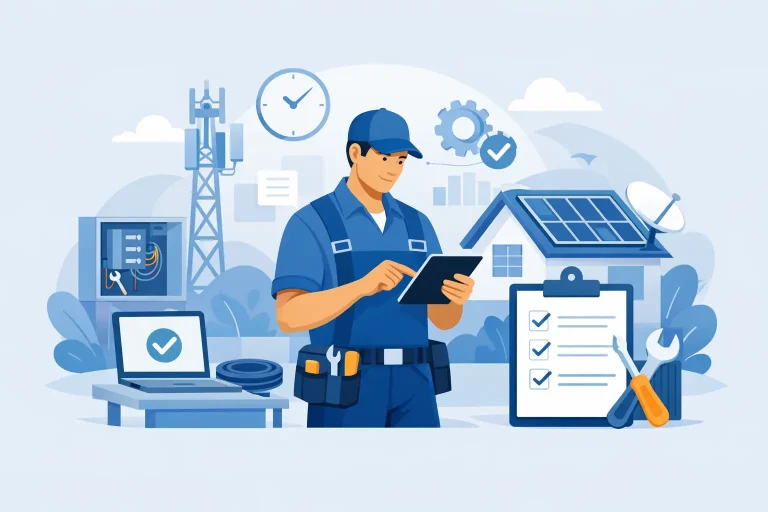
Communication is the next control point. Dispatch must push complete work details to the technician and confirm receipt, especially for high-priority or customer-facing work. If the technician has to call back for site contact details, asset history, or scope clarification, the process is already leaking time. Good dispatching reduces technician uncertainty before travel begins.
Then comes status management. This is where reporting either becomes useful or meaningless. Teams need standardized status definitions such as dispatched, en route, on site, waiting for parts, completed, and requires follow-up. If one technician uses completed to mean work performed and another uses it to mean temporarily stable, your dashboards will tell leadership very little. Clean status discipline is not clerical overhead. It is the basis for planning, customer updates, and labor analysis.
What a good dispatch workflow looks like
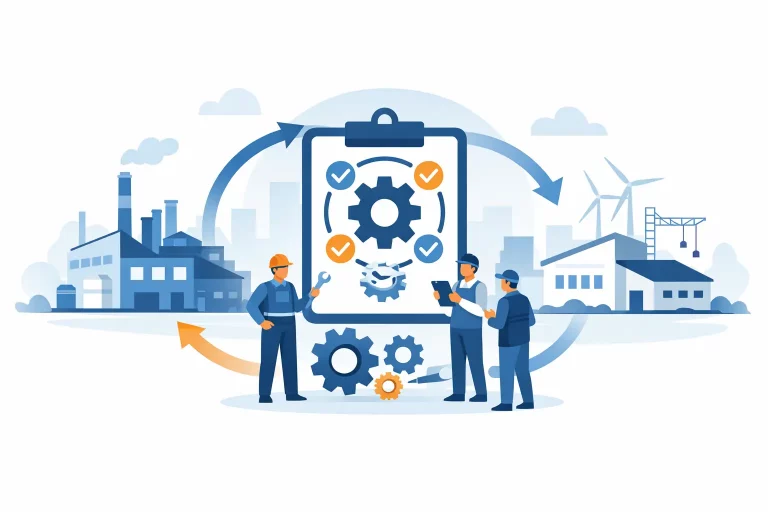
A reliable dispatch workflow usually follows a simple sequence, even if the operation itself is complex. Work is requested through a controlled channel. Required information is captured. The request is validated and prioritized. The dispatcher assigns the right resource based on defined criteria. The technician receives complete information. Status updates occur in the system, not just by phone. The work order is closed with accurate labor, completion notes, and outcome details.
That sounds straightforward because it is. The difficulty is execution discipline across shifts, sites, and personalities. If your process only works when one experienced dispatcher is on duty, it is not a process. It is dependency risk.
The organizations that improve dispatch performance usually standardize three things at the same time. They standardize intake rules, assignment logic, and technician feedback expectations. If only one of those improves, the process still stalls somewhere else.
Where dispatch teams lose time and control
The most common issue is poor work order quality. Requests come in without enough detail, and dispatch spends time chasing information instead of coordinating service. Another frequent problem is priority inflation. If everything is marked urgent, nothing is truly urgent. This burns technician capacity and trains the organization to treat the schedule as optional.
Manual workarounds are another major source of failure. Whiteboards, text messages, spreadsheets, and personal notes often fill the gap when the platform is not configured well or users do not trust it. Those workarounds may help one person get through the day, but they damage visibility for everyone else. Leadership ends up reviewing reports that do not reflect how the operation actually runs.
There is also a structural issue in many teams: dispatchers are expected to coordinate work without enough authority. If supervisors reassign jobs informally, if technicians self-prioritize outside the queue, or if customers can bypass intake rules, the dispatch function becomes reactive. Accountability disappears because the process has no operational backbone.
Build dispatch rules that match your operation
There is no universal model that fits every service environment. A centralized dispatch center serving hundreds of retail sites will need different controls than a campus maintenance team or a contractor with scheduled and emergency work mixed together. That is why the process should be designed around your failure points, service model, and reporting needs.
Still, a few principles hold up almost everywhere. Priority definitions should be objective. Technician pools should be structured by capability, region, or trade. Escalation paths should be explicit. Schedule changes should be visible in the system. And every dispatch decision should leave a usable data trail.
If your team is managing both preventive and reactive work, be careful not to let dispatch become a constant emergency channel. Reactive work will always feel more urgent in the moment, but if preventive schedules are repeatedly displaced, your backlog and asset risk will grow quietly until they show up as breakdowns. Good dispatch coordination protects planned work while still responding to genuine service disruptions.
Metrics that show whether the process is working
Dispatch performance should be measured with operational intent, not vanity reporting. Response time matters, but only when paired with work type and priority. Technician utilization matters, but only if it distinguishes wrench time from travel, waiting, and administrative delay. First-time fix rate is valuable, but it depends on assignment quality, parts readiness, and job planning.
A better reporting view usually includes dispatch-to-acceptance time, travel-to-on-site time, schedule adherence, reassignment rate, work order aging by status, urgent work percentage, and completion quality. These metrics show whether dispatch is organized or simply busy.
If your dashboards only show closed work orders and total tickets, you are missing the operating story in the middle. That middle is where delays, rework, and labor waste accumulate.
Technology helps, but process decides the outcome
A well-configured FSM or CMMS platform can improve dispatch speed, technician visibility, and reporting quality. But technology only works when the workflow behind it is defined and adopted. Dropdowns need clear definitions. Mobile statuses need to match real field conditions. Notifications need to support action, not create noise. Scheduling views need to reflect how work is actually assigned.
This is where many organizations stall. They buy software expecting discipline to appear automatically. It does not. Workflow redesign, data cleanup, role clarity, and operational training matter just as much as system features. Eficiqo often sees teams with capable platforms that are underperforming because dispatch logic was never fully standardized.
What to fix first
If your dispatch process feels unstable, start with the points that create the most downstream damage. Tighten intake requirements. Define a priority matrix. Standardize technician statuses. Clarify who has authority to assign and reassign work. Then test the workflow against real operating conditions, not just the ideal state.
A process is only useful if it holds up during peak demand, after-hours calls, technician absences, and incomplete information. That is where practical design matters more than theory.
Dispatch is not just about getting a job on the board. It is about controlling how service work moves through your operation so labor, data, customer response, and asset performance improve together. When that control is built into the process, the rest of the service organization gets easier to manage.