Field Service Operations Guide for Better Execution

A missed appointment at 8:00 a.m. rarely stays small. By noon, it has turned into a rescheduled customer visit, an overextended dispatcher, a technician running blind on asset history, and a manager trying to explain why the numbers still do not match reality. That is why a field service operations guide matters. It is not about documenting theory. It is about building a system that holds up when volume rises, staffing gets tight, and customers expect answers now.
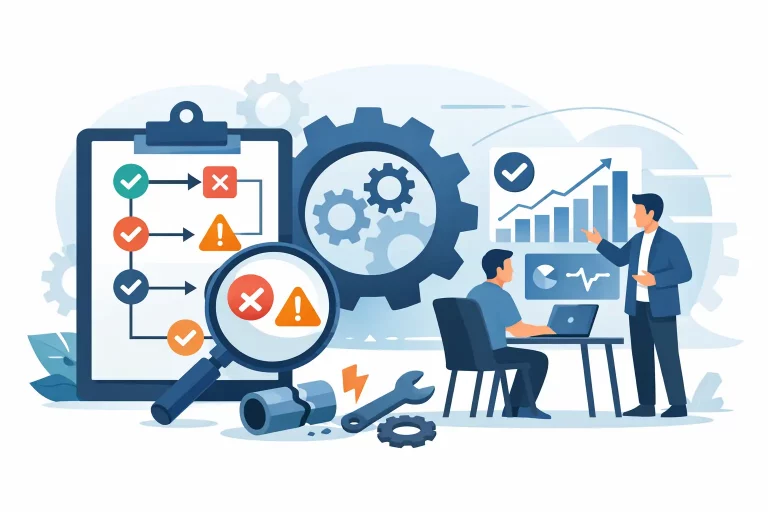
For most field organizations, the real problem is not effort. It is inconsistency. One technician captures clean notes and closeout codes. Another leaves work orders half complete. One dispatcher balances geography, skill, and priority well. Another is forced to react because the backlog is already out of control. Leaders often have an FSM or CMMS in place, but the platform functions more like a ticket inbox than an operating system. When that happens, service quality becomes dependent on individual habits instead of managed execution.
What a field service operations guide should actually fix
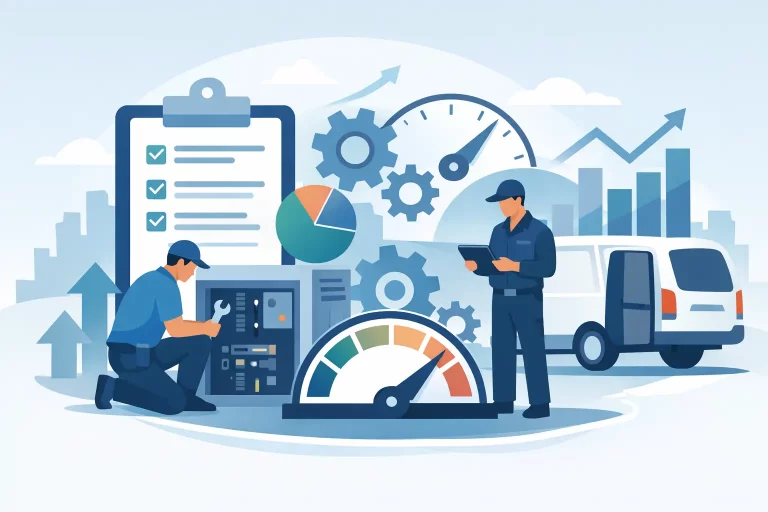
A useful operating model fixes the points where service organizations usually lose control: intake, prioritization, scheduling, dispatch, execution, closeout, reporting, and follow-up. If any one of those steps is weak, the rest of the workflow absorbs the damage.
Take dispatch as an example. Many teams think dispatch problems start with the scheduler. In practice, dispatch issues often begin earlier with poor work order triage, weak service classifications, missing asset data, or unclear response rules. When the incoming request lacks structure, scheduling becomes a guessing exercise. The result is more windshield time, more callbacks, and more frustration on both the customer and technician side.
The same pattern shows up in reporting. Leaders ask for first-time fix rate, response time, labor utilization, PM completion, and backlog aging. But if technicians are using inconsistent codes, skipping failure data, or closing work orders days later, those reports will mislead more than they inform. Better reporting is not a dashboard project first. It is an execution discipline project.
Start with workflow before technology
The strongest field service operations guide begins with workflow design, not software features. Technology matters, but systems rarely fail because a platform lacks buttons. They fail because the organization never decided how work should move from request to completion.
That means defining what qualifies as emergency, urgent, routine, and planned work. It means clarifying who can create requests, who approves them, and what information must be captured before dispatch. It means setting expectations for technician updates in the field, required closeout details, and when a work order can be considered complete.
This is where many organizations get stuck. They inherit years of habits, exceptions, and tribal knowledge. A senior technician knows which customer always needs a call before arrival. A dispatcher knows which site labels equipment incorrectly. A manager knows that certain SLAs are impossible to meet without manual workarounds. These workarounds can keep the operation moving, but they do not scale. If the workflow depends on memory instead of structure, performance will vary every time staffing, volume, or geography shifts.
The operating components that drive results
Intake and triage
If requests enter the system with vague descriptions, wrong locations, or no asset reference, downstream performance suffers immediately. Intake needs minimum data standards. The request should identify what failed, where it failed, who reported it, and how urgent it is based on defined business rules rather than opinion.
This is especially important in multi-site environments where the same issue may be described five different ways. Standardized categories, problem codes, and asset naming conventions reduce noise and make dispatch more accurate.
Scheduling and dispatch coordination
Scheduling should balance customer commitments, technician skill, geography, job duration, and part availability. That balance is rarely perfect. The point is to make the trade-offs visible and intentional.
For example, assigning the closest technician is not always the best move if the job requires a specialist and a return visit is likely. On the other hand, always waiting for the perfect technician can delay response and hurt service levels. Strong dispatch coordination depends on rules, escalation paths, and real-time visibility, not constant improvisation.
Technician execution in the field
A good service model gives technicians clear expectations without overcomplicating the job. They should know what information is required before arrival, what steps must be documented during work, and what closeout data is mandatory. Mobile workflows need to support execution, not slow it down.
This is a common failure point. Organizations add fields and forms with good intentions, then wonder why adoption falls off. If the workflow asks for too much, technicians will bypass it. If it asks for too little, leadership loses visibility. The right standard captures enough operational detail to drive reliability, accountability, and billing accuracy without turning every job into an administrative burden.
Closeout, invoicing, and reporting
A work order that is technically complete but operationally unfinished creates hidden backlog. If labor, materials, cause codes, customer sign-off, or service notes are missing, the job is not really done. It cannot support clean reporting, accurate invoicing, or useful trend analysis.
Leaders should treat work order closeout as a control point. It is where field execution becomes management data. Weak closeout discipline is one of the main reasons service organizations struggle to trust their own numbers.
Standardization is not bureaucracy
Operational leaders often worry that standardization will make teams less flexible. In reality, the opposite is usually true. Standardization reduces avoidable decisions so teams can respond faster where judgment actually matters.
A dispatcher should not have to guess whether a job is billable, what priority code to use, or which technician group owns the task. A technician should not have to interpret five different closeout methods across five regions. Standard work creates a common operating language, and that language is what allows an organization to scale.
That does not mean every process should be rigid. Some environments need local variation based on contract terms, site access rules, regulatory requirements, or asset criticality. The goal is to standardize the core 80 percent and intentionally define the exceptions. If every exception becomes normal, you no longer have a process.
Build KPIs around behavior, not vanity
One of the most practical sections in any field service operations guide is performance measurement. Too many teams track what is easy to pull instead of what actually changes behavior.
A useful KPI set should connect operational discipline to business outcomes. Response time matters, but so does schedule adherence. First-time fix rate matters, but so does return visit reason. PM completion matters, but so does on-time PM completion by asset class. Labor utilization matters, but only if travel, wrench time, and administrative time are defined consistently.
There is also a trade-off here. More metrics do not automatically improve control. If leaders review twenty KPIs and act on none, reporting becomes theater. A smaller set of trusted metrics, tied to clear ownership, usually drives better performance.
Why data quality is an operations issue
Bad data is often treated as a system cleanup task. It is not. It is an operating issue with direct consequences for uptime, labor efficiency, planning, and customer service.
When asset records are duplicated, locations are inconsistent, service categories are vague, or failure codes are optional, the organization loses the ability to plan effectively. Preventive maintenance strategies become weaker. Repeat failures are harder to identify. Technician productivity looks better or worse than it really is. Financial reporting drifts away from actual field activity.
This is one reason platform adoption stalls. Teams stop trusting the system because the system reflects poor process discipline. Cleaning data without fixing execution standards only resets the problem for a few months.
The role of preventive work in field service performance
Reactive overload is usually a sign of operating imbalance. If the field team spends every day chasing emergencies, the root issue may be poor PM design, weak inspection follow-through, or a backlog that has aged beyond control.
A mature service operation does not just respond well. It reduces avoidable demand. That requires preventive maintenance intervals that reflect asset criticality and failure history, not default manufacturer schedules copied into the system years ago. It also requires planners and supervisors to protect PM work from constant disruption. If preventive work is always the first thing sacrificed, reactive work will keep winning.
Making improvement stick
The hardest part is not diagnosing the gaps. Most leaders already know where the pain is. The hard part is turning scattered fixes into a controlled operating model.
That usually means documenting the workflow, tightening data standards, clarifying dispatch rules, simplifying mobile execution, and building reports that reflect the way the business actually runs. It also means coaching supervisors to enforce the process consistently. Without frontline accountability, even a well-designed system will slide back into old habits.
Eficiqo works with organizations facing exactly this issue: the software exists, the effort is there, but the operation still lacks structure. The opportunity is not to add more complexity. It is to create a field service system that people can follow, leaders can trust, and the business can scale.
A better operation rarely starts with a dramatic overhaul. It starts when leadership decides that inconsistent execution is no longer acceptable, and then builds the discipline to run service that way every day.