CMMS Compliance Documentation That Holds Up
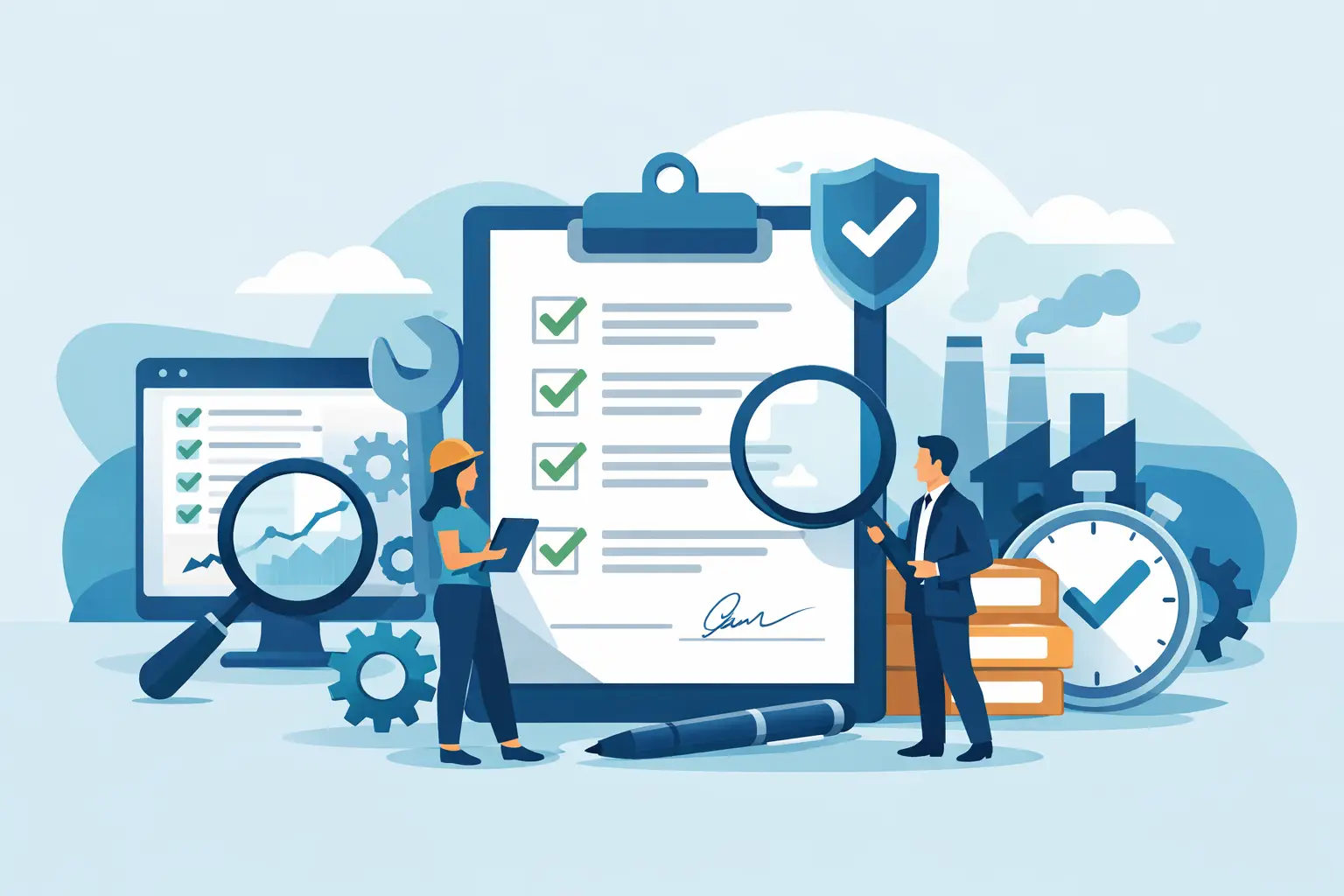
An audit rarely fails because a policy is missing. It fails because the work was done inconsistently, recorded late, or stored in a way no one can verify. That is where cmms compliance documentation either protects your operation or exposes it.
For maintenance leaders, facility managers, and service organizations, compliance documentation is not just a filing exercise. It is the operational proof that inspections happened, preventive maintenance was completed correctly, exceptions were escalated, and asset history can stand up to scrutiny. If your CMMS only captures the bare minimum, you are not managing compliance. You are hoping your team can reconstruct it later.
What CMMS compliance documentation should actually do
Good documentation does three jobs at once. It supports regulatory or contractual compliance, gives supervisors visibility into execution, and creates a reliable history of asset work. If one of those pieces is missing, the record may satisfy a checkbox without helping the business.
In many organizations, the CMMS contains thousands of closed work orders, but very little defensible documentation. The task says complete, yet there is no meter reading, no checklist result, no photo, no failure note, no timestamp discipline, and no clear tie back to the asset or location. That creates risk in regulated environments, but it also weakens planning, root cause analysis, and reporting.
The standard should be simple: if someone asks what was done, when it was done, who did it, what they found, and what happened next, your CMMS should answer without guesswork.
Why documentation breaks down in the field
Most compliance issues are process issues before they become system issues. Teams often blame the software, but the bigger problem is usually that documentation expectations were never designed into daily execution.
A technician in a hurry will close a work order with minimal notes if the workflow allows it. A supervisor will accept weak records if there is no review standard. A planner will skip structured fields if the asset hierarchy is messy and PM tasks are vague. Over time, the CMMS turns into a ticket log instead of an operating system.
This is especially common in multi-site environments. One location attaches photos. Another types free-form notes. A third closes PMs in batches at the end of the week. On paper, all three sites appear active. In reality, only one may be creating usable compliance records.
That inconsistency is what auditors, customers, and internal leadership notice first. Not the number of work orders. The credibility of the record.
The core elements of CMMS compliance documentation
If your operation depends on inspections, preventive maintenance, life safety checks, environmental controls, calibration, or service traceability, your documentation model needs structure. That means defining the minimum record required for each critical work type.
A strong CMMS compliance documentation process usually includes the asset or location identifier, the work order type, task-level instructions, date and time stamps, technician identification, pass-fail or measured results, exception notes, and evidence such as forms, signatures, or photos where needed. It should also show what happened when a task failed. A failed inspection without a follow-up path is not a controlled process.
The right level of detail depends on the environment. A hospital, an aviation support operation, and a commercial facility portfolio do not need identical records. But they do need consistency. More fields are not always better. If your team is forced to complete ten unnecessary entries, they will start bypassing the three that matter.
That is the trade-off leaders need to manage carefully. Too little structure creates risk. Too much creates noncompliance through avoidance.
Build documentation into the workflow, not after it
The best compliance records are created during execution, not reconstructed after the fact. That sounds obvious, but many teams still rely on paper notes, memory, text messages, or side spreadsheets and then expect the CMMS to become the system of record later.
That gap is where timestamps get distorted, findings get simplified, and accountability gets fuzzy.
A better model starts with work order design. PM templates should contain the exact checks, readings, and conditional prompts required for the task. Required fields should only be required when they truly support compliance or decision-making. Mobile workflows should make it easier to document correctly in the field than to skip steps and clean it up later.
If a technician performing a fire protection inspection must record a gauge reading, photo evidence, and deficiency code, the work order should guide that sequence. If an HVAC contractor needs to document filter replacement and refrigerant observations for customer reporting, those entries should be part of the standard workflow, not left to personal habits.
This is where CMMS configuration becomes operational strategy. The system should reinforce the behavior you need.
Standardization matters more than volume
Some organizations assume they are protected because they have a large amount of historical data. But volume is not the same as control. Ten thousand inconsistent records are harder to trust than one thousand standardized ones.
Standardization starts with master data. Asset names, location structures, trade codes, failure codes, and work order classifications need to mean the same thing across sites. Without that foundation, compliance reporting becomes manual and audit preparation becomes a scavenger hunt.
It also applies to technician execution. If one team documents deficiencies in the completion notes while another uses status codes and a third opens a follow-up work order with no linkage, leadership cannot see exposure clearly. The documentation exists, but it does not function as a management tool.
This is where many organizations get stuck. They are collecting data, but they are not producing evidence. Those are not the same thing.
Reporting is part of compliance control
Documentation is only useful if leadership can monitor it. That means compliance reporting should not stop at completed PM counts. It should show record quality, overdue critical tasks, exception trends, failed inspections, and closure discipline.
A closed work order rate can look healthy while documentation quality is collapsing underneath it. That is why review dashboards should include fields completed, missing readings, missing attachments where applicable, exception aging, and follow-up completion rates. Supervisors need a way to catch weak documentation before an auditor or client does.
There is also a business case here beyond compliance. When documentation is clean, organizations can identify recurring asset issues, labor inefficiencies, contractor performance gaps, and preventable emergency work. Better records improve decisions. They do not just reduce risk.
Common mistakes in CMMS compliance documentation
The most expensive mistake is treating documentation as an admin layer instead of an execution standard. Once that happens, the team sees the CMMS as extra work, and adoption drops.
Another common mistake is relying too heavily on free-text notes. Narrative has value, especially for unusual findings, but compliance records should not depend on someone writing the right sentence every time. Structured fields create consistency, faster reporting, and clearer accountability.
A third issue is weak exception management. Many teams document that something failed, but not whether it was corrected, deferred, approved, or escalated. That leaves the record unfinished from a compliance standpoint.
Then there is the false comfort of completed PMs. If a technician can close a critical inspection without entering readings or confirming each step, your completion metric is overstating performance.
How to strengthen CMMS compliance documentation
Start by identifying the work categories that carry the most regulatory, contractual, safety, or operational risk. Do not try to redesign every work order at once. Focus first on the inspections, PMs, and service events where documentation quality matters most.
From there, define the minimum required record for each category. Keep it practical. If a field does not support compliance, execution, or reporting, question whether it belongs. Then align templates, statuses, mobile forms, approval steps, and reporting around that standard.
Supervisor review is a critical piece. If no one checks record quality, technicians will naturally optimize for speed. Review does not need to be bureaucratic, but it does need to be consistent.
Training also needs to connect documentation to real outcomes. Teams are more likely to comply when they understand that a missing reading can compromise an audit, delay invoicing, weaken warranty recovery, or hide a reliability issue.
For organizations with fragmented processes, outside operational support can help accelerate this work. Firms like Eficiqo often focus less on software features and more on how workflows, data standards, and reporting discipline turn the CMMS into a system that can actually support compliance and performance.
The real goal is not more documentation. It is documentation that proves control, supports decisions, and holds up under pressure. If your team cannot trust the record, neither will anyone else.
A CMMS should not force you to scramble every time someone asks for proof. It should let you answer with confidence because the process was built correctly from the start.